


Home renovations in Cheltenham.
Full refurbishments of Regency, Victorian and later homes across Cheltenham and Charlton Kings, from strip-out and rewiring to bespoke joinery and the final coat of paint.
What a full renovation involves
Four stages, one team, one project manager.
01
Survey and strip-out
We record the original features worth keeping, then remove what’s being replaced, protecting floors, stairs and joinery as we go.
02
Structure and services
Any structural changes, then new wiring, plumbing and heating, including underfloor heating where the floors allow it.
03
Kitchens, bathrooms and joinery
Decoris designs and fits the kitchen, bathrooms and bespoke joinery, from built-in storage to panelling.
04
Finishing and handover
Plastering, flooring and full decoration, then a walk-round with you before handover.
A Cheltenham renovation
“Precision came in to do a full rip-out and refurbishment of my house… The teams were a pleasure to work with and I would recommend them without hesitation.”
Justin Penketh
Full refurbishment · Cheltenham · Google review
Listed and period homes
Renovating a listed home in Cheltenham.
Cheltenham has around 2,600 listed buildings, many of them Regency townhouses. Renovating one is mostly about knowing what needs consent and what doesn’t, and agreeing the details early.
- What needs consent. Removing or moving walls, taking out fireplaces, changing windows and doors, and altering original joinery or plasterwork usually need listed building consent.
- Repairs. Like-for-like repairs often don’t need consent, but it’s worth checking with us or the council before starting.
- Windows. Secondary glazing is often accepted where replacing original sashes wouldn’t be.
- Materials. Solid-wall houses usually need breathable, lime-based plasters and mortars rather than modern cement and gypsum.
- Unlisted period homes. Inside the house you can usually renovate freely, but external changes in a conservation area may still need permission.
Later family homes
Not every renovation is Regency.
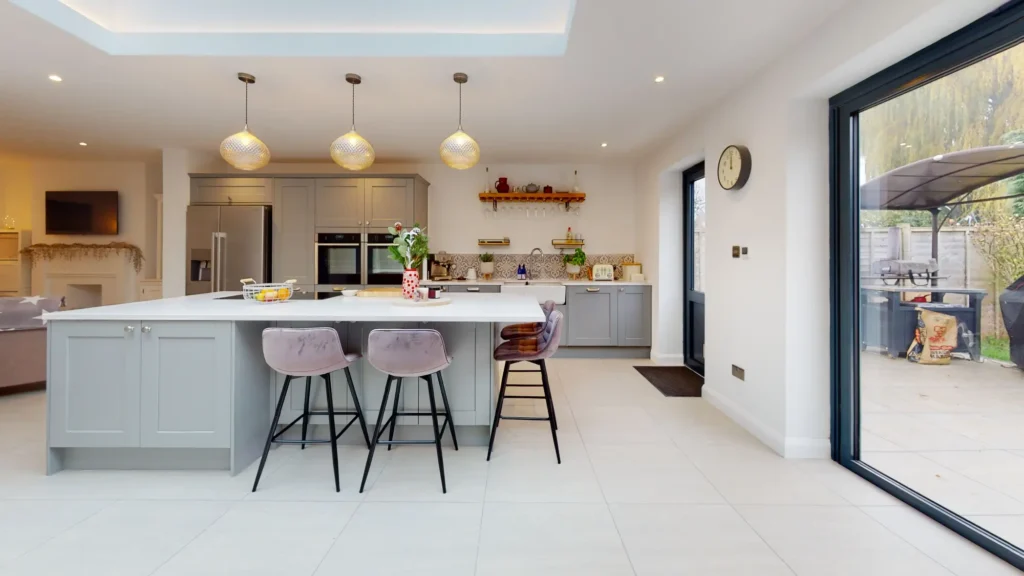
Plenty of Cheltenham renovations are in later houses in Up Hatherley, Warden Hill, Benhall and Hatherley, where the work is about layout and comfort: knocking a kitchen and dining room together, adding a utility, replacing tired bathrooms and upgrading heating and insulation.
Precision Green Energy can add a heat pump, solar panels and battery storage at the same time, while the floors and walls are already open.
Charlton Kings
Renovations in Charlton Kings.
From older cottages around Cudnall Street and Bafford to large family houses on Battledown, Charlton Kings has some of Cheltenham’s most varied homes. Internal renovations rarely need permission unless the house is listed, but external changes in the two conservation areas, or on the Battledown estate, need approval first.
FAQs
Renovation questions from Cheltenham
Can we live in the house during the renovation?
It depends on the scope. For a whole-house rip-out it’s usually easier to move out, but many clients stay at home while we work room by room.
Can you renovate in stages?
Usually, yes. We can plan the work in phases, for example the ground floor first and bedrooms later, so the house stays usable and the cost is spread.
Do I need permission to renovate inside my house?
Not usually, unless the house is listed. Building regulations still apply to things like structural changes, new electrics and new bathrooms, and we arrange those approvals.
Can you fit underfloor heating in a period house?
Often, yes. Our Cheltenham refurbishments have included new underfloor heating. In a listed house it depends on the floors, so we look at that during the first survey.
Are you planning an extension too?
Many renovations include one. See home extensions in Cheltenham for how the rules work.

Renovating a Cheltenham home?
Tell us about the house and what you’d like to change. We reply to every enquiry within 24 hours.