
Fox Hill
Bourton-on-the-Water. Limestone floors, panelling and a games room with a vaulted ceiling.
View project →


Builders in Cirencester
Extensions, renovations and new homes in Cirencester and the villages around it, including Bibury, Fairford and South Cerney, designed with the Cotswold stone and historic streets of the area in mind.
Pictured: Corn Barn, Burford

The capital of the Cotswolds
Cirencester was Corinium, the second-largest town in Roman Britain, and its streets still show almost every period since. Georgian and older townhouses line Cecily Hill, Dollar Street, Coxwell Street and Park Street, while Stratton, Watermoor, Chesterton and Kingshill are full of family homes from the last century, and the new Steadings neighbourhood is adding up to 2,350 more.
That history affects building work. Groundworks near the centre can uncover Roman remains, so the council sometimes asks for an archaeological watching brief as a planning condition. We allow for it in the programme so it doesn’t catch you out.
What we build in Cirencester
Careful refurbishment of Georgian and older townhouses in the centre, where conservation area rules and listed building consent often apply.
Kitchen extensions, garden rooms and two-storey additions for family homes in Stratton, Watermoor, Chesterton and Kingshill.
Individually designed houses, replacement homes and barn conversions in and around the town, built to the Cotswold Design Code. We can also be the new build contractor for your architect’s scheme.
Decoris, our sister company, designs and fits them, whether it’s a townhouse kitchen or a set of en-suites in a converted barn.
Terraces, paving, driveways and boundary walls in materials that suit a Cotswold stone house.
Heat pumps, solar and battery storage from Precision Green Energy, positioned with the conservation area and the National Landscape in mind.
Around Cirencester
Home to Arlington Row, the National Trust’s row of weavers’ cottages, and one of the most visited villages in the Cotswolds. Almost every change here is shaped by the conservation area and listed buildings.
A market town on the River Coln, known for the medieval stained glass in St Mary’s Church. We extend and renovate stone houses in the town and nearby villages.
A village beside the Cotswold Water Park, with a mix of older stone cottages and newer homes suited to extensions.
Small villages east of the town where most homes are stone-built and many are listed.
Villages just outside the town, from farmhouses and cottages to family homes.
Towards the Thames, at the eastern edge of Cotswold District.
Planning in Cirencester
Cotswold District Council decides planning for Cirencester and the villages around it. We prepare the drawings and manage the application as part of our design service.
Our design service →Recent Cotswold work
Bourton-on-the-Water. Limestone floors, panelling and a games room with a vaulted ceiling.
View project →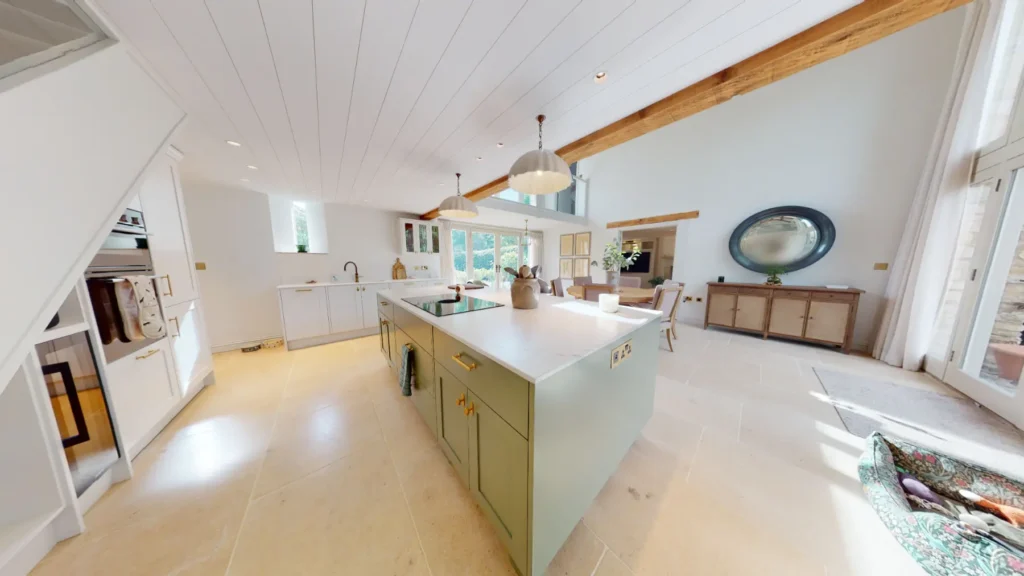
Burford. A barn conversion with a mezzanine and a wine cellar under a glass floor.
View project →
Stroud. A stone extension under a copper roof, opening onto a new terrace.
View project →FAQs
Yes. We renovate and extend townhouses in the centre, as well as family homes in Stratton, Watermoor, Chesterton and Kingshill. In the conservation area we design to the council’s appraisal and the Cotswold Design Code from the start.
Sometimes. Near the Roman town, the council can add a condition asking for an archaeologist to watch the groundworks. If it applies, we plan the dig around it so the programme isn’t held up.
Yes, along with South Cerney, Ampney Crucis, Barnsley, Kemble, Coates, Siddington, Lechlade and Down Ampney.
Yes. We record what’s original, agree the work with the conservation officer through listed building consent, and repair or match period details.
Not always. Many single-storey rear extensions are permitted development, but conservation areas, the National Landscape and listed buildings all bring extra rules. We check your address and handle the application if one is needed.

Tell us about your home or plot. We reply to every enquiry within 24 hours.